The incidence of infection following implantation of cardiac implantable electronic devices (CIEDs) is increasing at a faster rate than that of device implantation.
Between 1993 and 2008, there was a 96% increase in the implantation of CIEDs. This coincided with a 210% increase in CIED infections.1
22-56%2,3 of patients are considered to be at increased risk for CIED infection.
Preventing CIED Infections
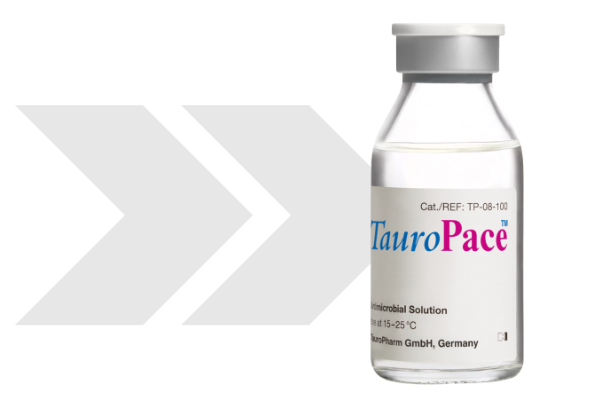
TauroPace™ is a simple and effective way to reduce the risk of CIED infections. 4
It is clinically proven that:
TauroPace™ reduces CIED contamination and infection risk in patients.
TauroPace™ enhances wound healing. 5
NOantibiotics,NOresistance.6
The active ingredient within TauroPace™ is Taurolidine, which kills more than 500 types of bacteria and fungi 7 (including MRSA and VRE). Taurolidine is not an antibiotic and therefore avoids antibiotic resistance concerns. It quickly degrades to taurine, cardon dioxide and water.
Report published in 2024 sharing the safety and efficacy of TauroPace™ from a European registry.
From January 2020 to November 2022, TauroPace™ was used in 822 CIED procedures.
At 3-month follow-up CIED infection rates were 0.125%
At 12-month follow-up CIED infection rates were 0.51%
No adverse events related to TP were observed.
Conclusion: Report concluded TauroPace™ to be effective and safe in preventing CIED infections.
Reference – Vonthein, R., et al. (2024). Taurolidine-containing solution for reducing cardiac implantable electronic device infection-early report from the European TauroPaceTM registry.
1. Greenspon, A.J., et al., 16-year trends in the infection burden for pacemakers and implantable cardioverter-defibrillators in the United States 1993 to 2008. J Am Coll Cardiol, 2011. 58(10): p. 1001-6.
2. Mittal S et al. (2014) Heart Rhythm 11(4):595-601.
3. Eby E et al (2018) EP Europace. (s1):i106
4. Henke J, et al. (2022) European Journal of Arrhythmia & Electrophysiology.2022;8.
5. Wu L et al. (2021) Ann Transl Med. 2021;9;1010.
6. Radakovic S, et al. (2020) Antibiotics.2020;9:166
7. Torres-Viera, C., et al. (2000) Activities of Taurolidine In Vitro and in Experimental Enterococcal Endocarditis. Antimicrobial Agents and Chemotherapy. 44 (6): 1720–1724.
Need Help Choosing the Right Product?
Our team of clinical specialists is available to provide detailed specifications and help configuration for your facility's unique needs.